
Green coffee: how to brew it as an infusion and roast it at home
Green coffee: how to brew it as an infusion and roast it at home
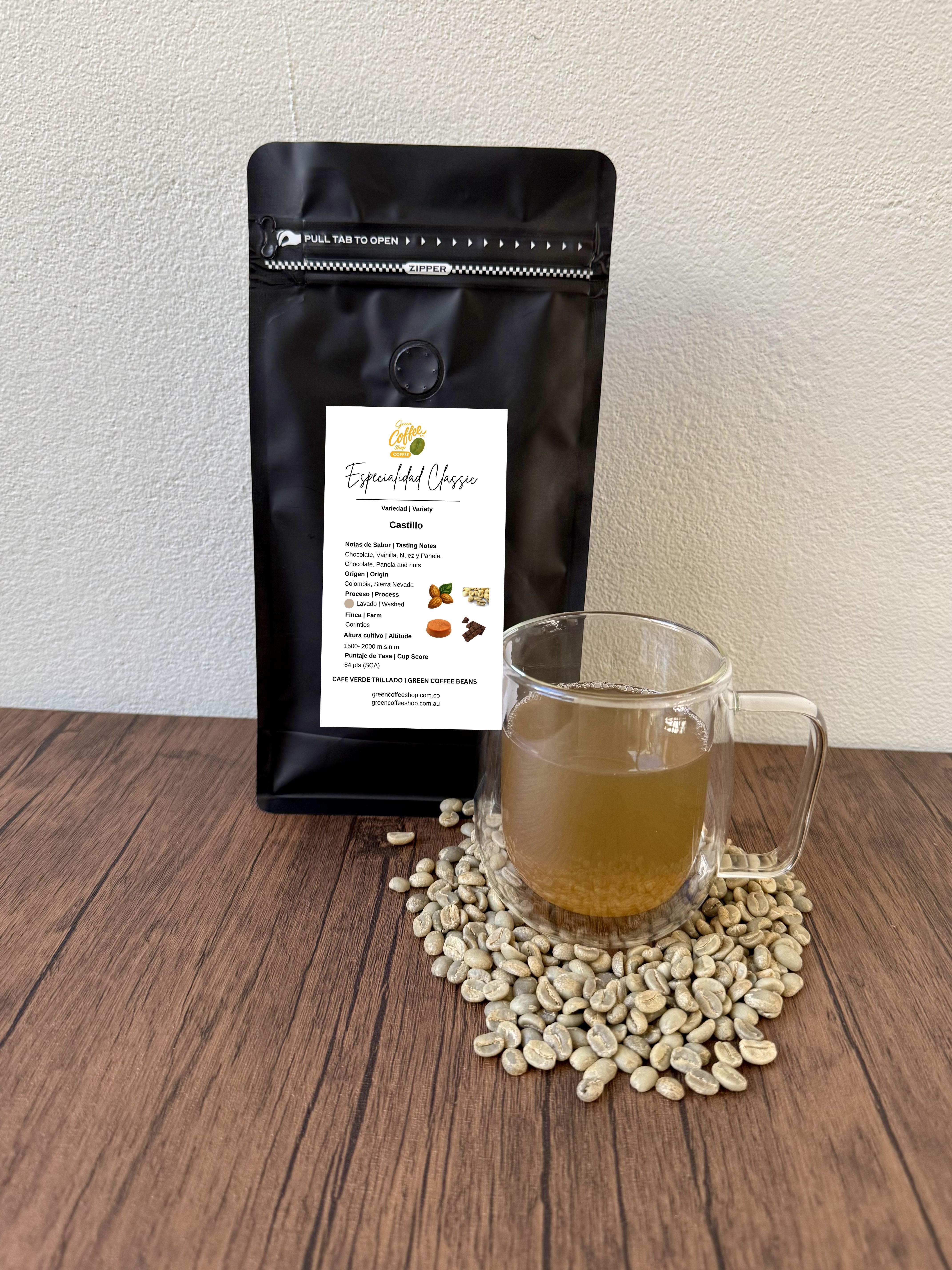
Green coffee is unroasted coffee: the bean has already been processed and dried, but it hasn't yet been through the heat of roasting. That opens two very different paths. You can brew it as an infusion to get to know a lighter, herbal, vegetal cup, or you can roast it at home to discover how aroma, sweetness and acidity change with roast development.
In this guide you'll learn what green coffee is, how to brew it as an infusion, how to roast it at home in a simple way and which coffees are worth starting with. If you want an easier, lower-risk entry point, Castillo-based profiles are a great base. If you'd rather explore more expressive profiles, you can move on to varieties such as Chiroso, Geisha, Papayo or Pink Bourbon.
What is green coffee and how is it different from roasted coffee?
Green coffee is the coffee bean before roasting. At a glance it feels harder, denser and has a much more discreet aroma than roasted coffee. It doesn't behave the same in the cup either: as an infusion it usually gives softer, vegetal and herbal profiles, while roasting brings out sweeter, floral, fruity or chocolatey notes, depending on the variety, the process and the roast level.
That's why green coffee isn't just "unfinished coffee". It's a versatile raw material that lets you approach the product through two different experiences: one more curious and culinary, the other more technical and experimental.
Two ways to make the most of green coffee
1) Brew it as an infusion
If you want to try green coffee in its most direct form, an infusion is the simplest way to start. Don't expect the classic taste of filter coffee or espresso. What you'll find is a lighter drink, with herbal, vegetal notes and a subtle sweetness.
2) Roast it at home
If you'd like to go a step further, green coffee also lets you experiment with home roasting. It's a good way in for anyone who wants to better understand why the same coffee changes so much between a light, medium or more developed roast. With small batches you can learn a great deal about development, aroma and balance in the cup.
How to brew green coffee as an infusion, step by step
The most practical way to start is with a simple, repeatable preparation. You don't need any special equipment.
Basic method
- 30 grams of green coffee
- 500 ml of water
- Crush or lightly crack the green coffee. It doesn't need a fine grind; what matters is opening the bean to help extraction.
- Bring the water to the boil.
- Add the green coffee and lower the heat.
- Simmer gently for 10 to 15 minutes.
- Strain and serve.
If the cup seems too light, you can raise the dose a little or extend the extraction slightly. If you prefer a gentler profile, let it cool and try it cold. The point here isn't to imitate roasted coffee, but to understand another expression of the bean.
What flavour to expect from a green coffee infusion
A green coffee infusion usually sits in a more herbaceous, clean and light sensory range. It doesn't usually have the bitterness many people associate with roasted coffee, nor the aromatic intensity of a traditional filter coffee.
If you're just starting, the sensible thing is to begin with more classic, lower-risk coffees. On that route, Castillo-based profiles work very well for understanding the basics of green coffee before moving into overly exotic profiles.
Which green coffee to buy to get started
It depends on what you want to do.
If you want an easier, more affordable entry point
Start with a classic coffee such as Castillo Washed or similar Castillo-based profiles. It's a very good control reference because it usually offers a balanced cup, with notes associated with panela, nuts and soft citrus when washed. It's a very useful option to get familiar with green coffee before moving on to rarer or more expensive profiles.
It's also a smart choice if your plan is to try it first as an infusion and then do your first home roasts without pushing up the cost per kilo too much.
→ See the available green coffee catalogue
If you want to experiment with more complexity
Once you want to compare profiles and notice clearer differences between varieties, that's when it's worth moving to coffees such as Chiroso, Geisha, Papayo or Pink Bourbon. In these coffees the change from green to roasted bean becomes much more obvious, which makes the experience more educational and more fun.
Castillo vs. varieties: which to choose
Chiroso
A very good gateway to more expressive profiles. It's associated with a floral, sweet and very fragrant profile, with notes of panela and mandarin. If you're looking for a coffee that quickly shows you how a well-handled roast can open up aroma and complexity, Chiroso makes a lot of sense.
Geisha
The reference for anyone who wants a more delicate, aromatic experience. As a washed coffee it's recognised by intense floral notes such as jasmine, bergamot, black tea and tropical fruit. It isn't the most affordable option, but it is one of the most instructive when you want to understand why some varieties are so highly valued in specialty coffee.
Pink Bourbon
If you're drawn to aromatic, elegant profiles, Pink Bourbon is another great route. Washed, it's described with notes of jasmine, raspberry and red wine, with lively, elegant acidity. In some lots you can also see differences in roast loss by screen size, which is especially useful if you want to buy more carefully for home roasting.
Papayo
Papayo is a good option for anyone who wants to step away from the classics into more distinctive territory. It makes sense whether you want to try a honey or natural profile or compare how much the cup changes as you develop different roasts at home.
How to roast green coffee at home
You don't need to start with a professional roaster. To learn, a heavy-bottomed frying pan or a home oven can be enough, as long as you work in small batches and have good ventilation.
Simple frying-pan method
- Preheat a heavy frying pan over medium-high heat.
- Add 100 to 150 grams of green coffee.
- Stir constantly to avoid scorched spots.
- Listen for first crack: at that point you have a light-roast reference.
- If you want more development, carry on a little longer, very carefully.
- Remove and cool immediately in a metal colander or a wide container.
- Let it rest before grinding and brewing.
Video: Roasting green coffee at home, step by step
At first the goal isn't to "make the perfect roast", but to learn to recognise changes in colour, aroma, expansion and sound. After two or three tries you'll already understand much better how each variety responds.
How to choose between a classic coffee and a variety
Choose a classic coffee if...
- You want to start with less risk.
- You'd like to try an infusion before getting more involved.
- You want a more controllable base for your first roasts.
- You care more about repeatability than about an exotic profile.
Choose a variety if...
- You want to notice clearer differences between profiles.
- You like comparing processes and varieties.
- You already enjoy specialty coffee and want to understand it from origin.
- You want a more aromatic, expressive experience in home roasting.
A simple route so you don't buy blind
If it's your first purchase, a smart way to go about it is this:
- First purchase: a classic coffee such as Castillo, to understand the starting point.
- Second purchase: a more expressive variety such as Chiroso or Geisha, to compare.
- Third purchase: repeat the coffee that worked best for you and adjust the roast, dose or brewing.
That progression helps you build real judgement. You're not buying for a pretty name, but from accumulated experience.
What The Green Coffee Shop Colombia offers in green coffee
At The Green Coffee Shop Colombia you'll find everything from classic entry-level coffees to exploration varieties for those who want to go deeper into green coffee. The current inventory includes green coffees from Huila, Sierra Nevada and Santander, with different process routes and, in several cases, options by screen size and format so you can buy anything from a trial amount to larger volumes.
Several product pages also show useful information for buying more carefully, such as origin, process, format and, for some lots, differences in roast loss by screen size. That lets you start with a more controlled purchase and only scale up once you've confirmed the profile works for you as an infusion, for home roasting or both.
Green coffee FAQs
Does green coffee taste the same as roasted coffee?
No. As an infusion it's usually much lighter, herbal and vegetal. The classic coffee profile appears after roasting.
Can you roast at home without professional equipment?
Yes. You can start with a frying pan or an oven, always in small batches and with good ventilation.
What's a good coffee to start with?
Castillo is a very good base to start with, because it works as a more stable reference that's easy to read both as an infusion and in your first roasts.
Which variety is best if I want to learn about sensory profiles faster?
Chiroso and Geisha are two very good options for noticing clearer differences in aroma and complexity.
Does it make sense to buy a premium variety the first time?
Yes, but you'll usually get more out of starting with a classic coffee and then comparing it with a variety. That way you better understand what you're paying for and what you're tasting in the cup.
Conclusion
Green coffee is valuable when you use it with intention. It can be a simple way into a different drink, or it can become a tool for learning to roast and read profiles with more judgement.
If you want to start with less risk, begin with a classic coffee. If what you enjoy is exploring aroma, variety and transformation in the cup, take the leap to a more expressive profile. What matters isn't buying the most exotic coffee on day one, but choosing a coffee that genuinely helps you learn.
Ready to start? Explore our green coffee catalogue and find a coffee that fits your next experiment.



Comments