
Coffee yield factor: formula, table and how to work it out

The yield factor (factor de rendimiento) is the number of kilos of dry parchment coffee needed to get a 70 kg sack of excelso coffee: the lower it is, the more sound coffee you receive. At factor 94, a 125 kg load yields about 93.1 kg of green bean; at factor 88–90, between 97.2 and 99.4 kg, that is, 4 to 6 kg more coffee to roast and sell per load.
Buying green coffee to roast? Get a quote per kilo and by screen size
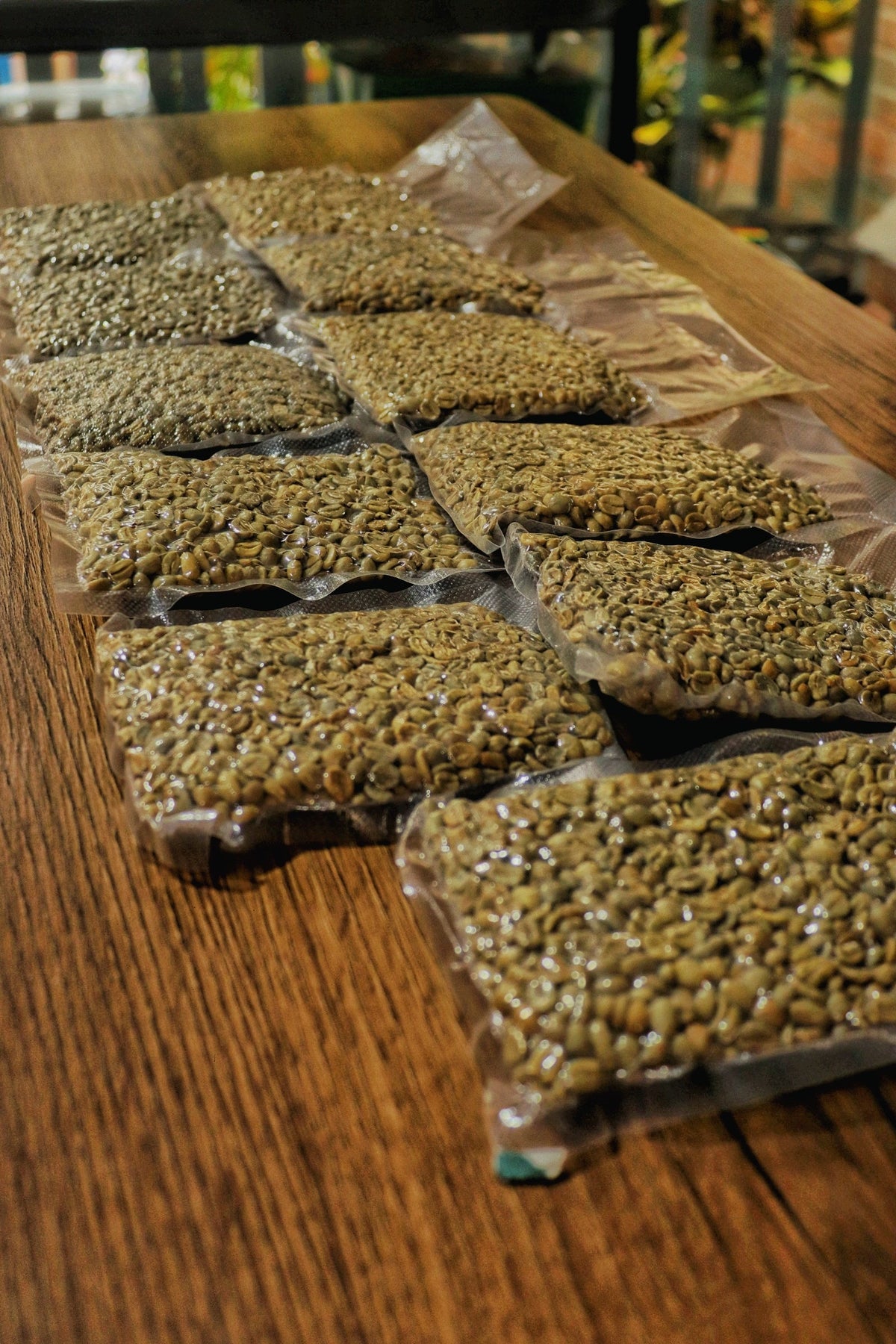
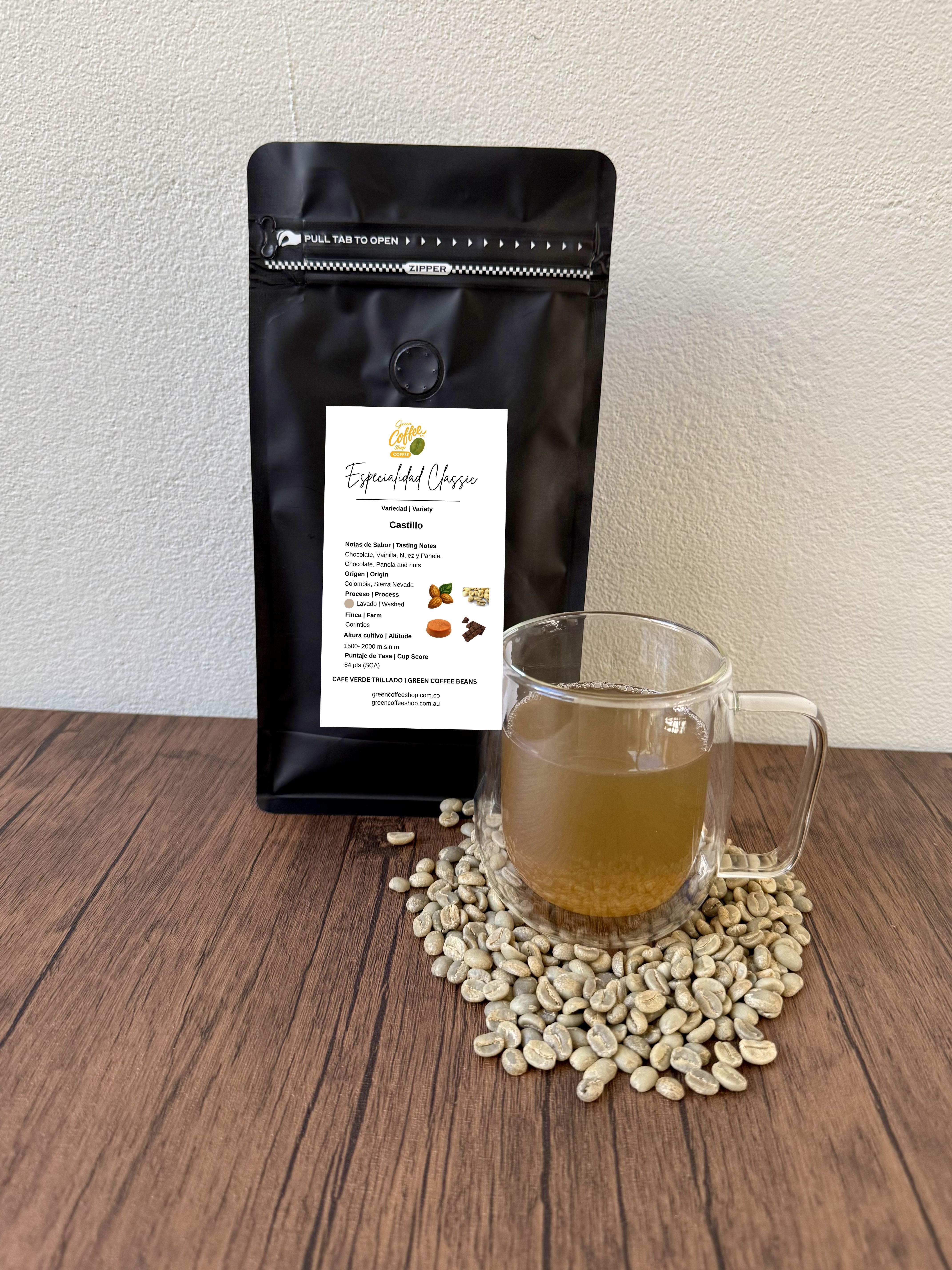
Milled lots from Huila, Nariño, Cauca, Sierra Nevada, Santander and Valle del Cauca from 1 kg, with a lot sheet (moisture, screen size, SCA score) and the coffee grower's name. Shipping anywhere in Colombia.
Lots available today (price per kg, at 1 kg)


The price-per-load myth
When you check the market price of coffee in Colombia (the FNC reference), what you see is the value of a "125 kg load of dry parchment". But here's what many overlook: you don't roast parchment, you roast green bean (excelso).
Many roasters think they're saving money by buying a "bargain" load with a high yield factor (98, 100 or more). In reality they're paying transport, storage and milling for husk and pasilla (rejects), not for quality coffee.
At The Green Coffee Shop Colombia we work with a different philosophy: maximise your real green bean.
What is milled green coffee?
Milled green coffee is the bean once it has been processed (pulped, fermented, washed and dried) but not yet roasted. Unlike parchment coffee, which still has its husk, milled coffee is ready for the roaster.
- Clean bean, without the parchment husk
- Moisture between 10 and 12 %
- Graded by screen size (bean size)
- Storable for up to 12 months in optimal conditions
1. Factor 88 vs. factor 94: the yield battle
The factor is the amount of parchment coffee you need to mill to get a 70 kg sack of export-grade excelso.
- Higher factor = lower quality: you need more coffee to fill the sack.
- Lower factor = higher quality: the bean is dense, sound and heavy.
| Yield factor | Sound green bean per 125 kg load | Difference vs. factor 94 |
| 94 (market standard) | 93.1 kg | – |
| 90 | 97.2 kg | +4.1 kg |
| 89 | 98.3 kg | +5.2 kg |
| 88 | 99.4 kg | +6.3 kg |
Calculation: 125 kg ÷ factor × 70 kg.
Our selection works with factor 88 to 90.
The mathematical conclusion? With factor 88 you receive more than 6 extra kilos of coffee per load compared with the standard. That's 6 more kilos you can roast and sell instead of losing them as waste.
More lots from San Agustín, Huila (price per kg, at 1 kg)
 Washed Yellow Caturra
SCA 85.5 · for espresso
$70.000 / kg
 Washed Tabi
SCA 86.25 · for filter
$80.000 / kg
 Washed Geisha
SCA 86.25 · for filter
$95.000 / kg
Looking by profile? See the lots for espresso or the lots for filter. Want to try first? Ask on WhatsApp for a calibration kit of 200 g to 1 kg: its value is credited to your first order.
How much does green coffee cost in Colombia?
The price depends on variety, process, screen size and factor. As a reference, these are the prices per kilo in our store (1 kg, updated 13 November 2026):
| Lot type | Examples | Price per kg (1 kg) |
| Premium commercial, washed | Blend, Castillo, Caturra, Colombia, Regional AA | $58.000 – $70.000 |
| Exotic microlots | Pink Bourbon, Tabi, Papayo, Geisha, Laurina | $76.000 – $144.000 |
| Co-fermented (culturing) | Bourbon Rosado Coco | $174.900 |
At 5 kg, 12 kg and 35 kg the price per kilo goes down (check each lot). Factors that move the price:
- Screen size (14, 15/16 or 17/18): larger screens cost more
- Yield factor: a factor of 88–90 justifies a higher price
- Process (washed, honey, natural, co-fermented)
- Origin and altitude
The price per kilo isn't the only cost: work out your real cost per cup with our cost and profitability calculator.
2. The hidden cost of buying cheap
Imagine you buy coffee at factor 100 because the load was $100.000 cheaper. Sounds like a good deal, right? Wrong. When you buy high factors you take on invisible costs:
- Wasted freight: you pay to transport kilos of defects and husk you won't use.
- Roasting loss: lower-density beans, common at high factors, tend to scorch or develop unevenly.
- Fewer cups per sack: profitability is measured in sellable cups. A factor-88 sack produces more high-scoring cups than a factor-94 one.
3. Clean cup: zero defects, zero risk
The Federation's reference price assumes the coffee will have defects; that's why there is an official table of cup-quality deductions. When you buy standard coffee you take the risk that one phenolic bean ruins your whole roast batch.
Our promise: at The Green Coffee Shop Colombia we don't apply deduction tables because we filter out defects at origin.
| Defect type | Sensory problem | Market deduction (approx.) | Our guarantee |
| Type I | Chemical, phenol, mould | -$88.000 / load | 0 % (removed) |
| Type II | Ferment, vinegar | -$20.000 to -$60.000 | 0 % (removed) |
| Type III | Stale (reposo) | -$20.000 | 0 % (removed) |
4. How to check green coffee quality before you buy
- Screen size: uniform bean; at least 80 % should pass the stated screen; broken, black or defective beans below 5 %.
- Moisture: between 10 and 12 %. Above 12 % there is a risk of mould. Ask for the physical analysis.
- Yield factor: weigh 1 kg of sample before and after milling. A factor of 88 or lower is excellent. Work out your factor here.
- Roast test: ask for a 200–300 g sample before buying volume, roast it with your standard profile and judge cleanliness and sweetness.
- Traceability: farm, municipality, department, altitude and botanical variety.
At The Green Coffee Shop Colombia we work with factor 88–90 and traceability down to the coffee grower.
5. Transparency: compare before you buy
Our price per load is higher than the FNC base price, and now you know why: you pay for real green bean and zero defects, not for husk.
Conclusion
Don't let the price per load fool you. Your profitability lies in yield and cup consistency. Move to factor 88–90 and stop paying for waste.
Get a quote for your next lot
Tell us how many kilos you roast a month and what profile you're after; we'll reply with lots, screen sizes and a volume price.
Published: 10 February 2026 · Updated: 13 November 2026. What changed: available lots and store prices per kilo as of 13 November 2026.


Comments