☕ Not sure which coffee to choose? Find it in 3 questions →
🚚 Free shipping anywhere in Colombia, roasted to order. See roasted coffee →
Skip to main content

How to brew V60 at home: step-by-step recipe with specialty coffee (14 g, 210 ml, 93 °C)
Cómo preparar V60 en casa: receta paso a paso con café de especialidad (14 g, 210 ml, 93 °C)

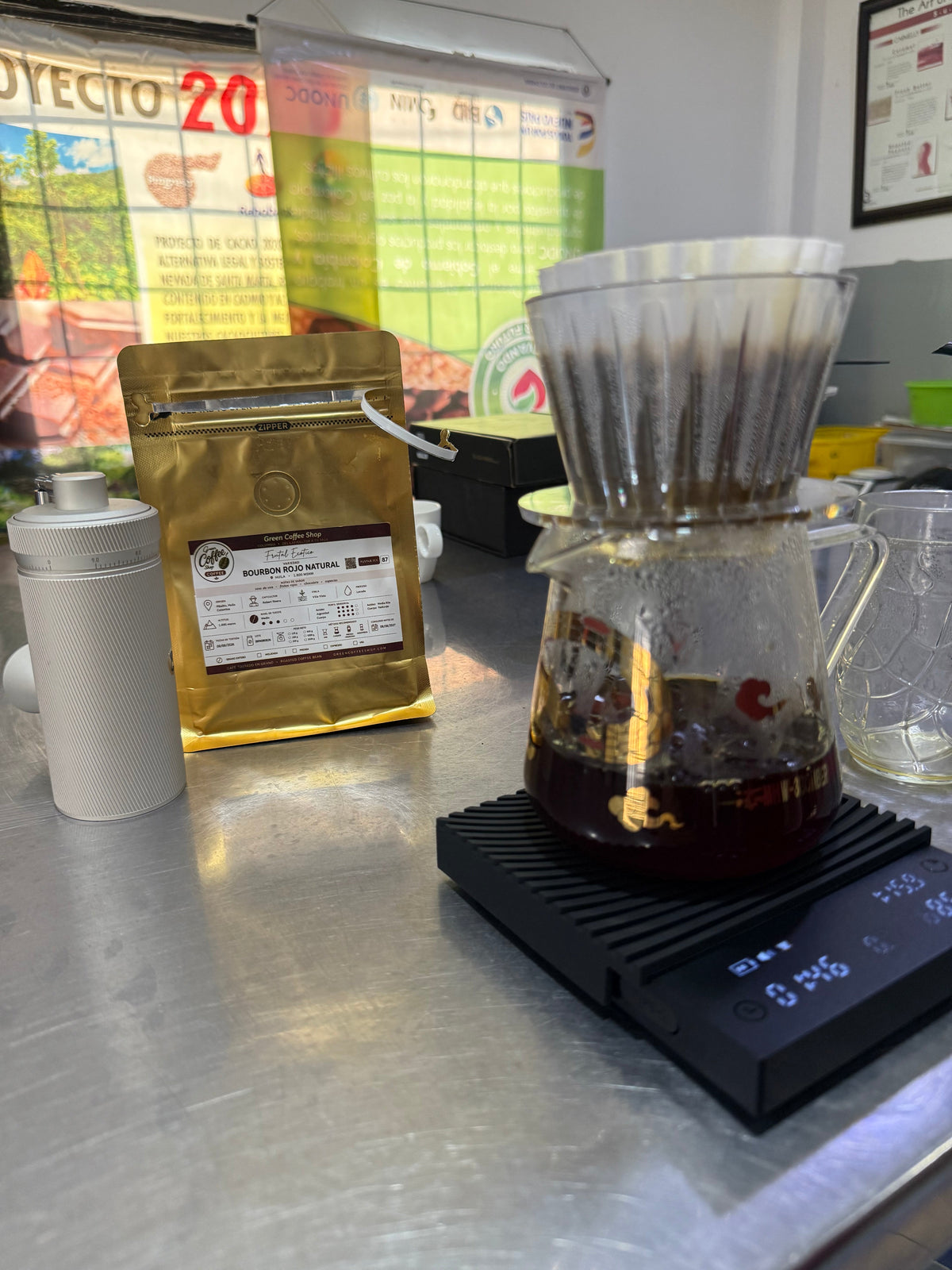
The V60 is the simplest filter method for really noticing what a specialty coffee has to offer: acidity, sweetness and aroma. You don't need to be a barista: you need a scale, hot water and this recipe, the same one printed on the label of every one of our bags.

The label recipe

  • Coffee: 14 g -17g
  • Water: 210 - 255 ml at 93 °C
  • Grind: medium (similar to coarse table salt)
  • Total time: between 2:30 and 3:00 minutes

For filter it's 14 g of coffee for every 210 ml of water, a ratio of 1 to 15. If you want to make two cups, double both figures: 28 g of coffee and 420 ml of water.

What you need

  • A V60 (plastic, ceramic or glass) and paper filters
  • A scale that measures grams
  • A kettle, ideally gooseneck so you can pour calmly
  • A timer (your phone's will do)
  • Freshly ground coffee for filter, or coffee ground for filter by the roaster

Step by step

  1. Heat the water to 93 °C. If it boils, let it sit for a couple of minutes before using it.
  2. Rinse the filter with hot water to remove the paper taste and warm the V60. Throw that water away.
  3. Add 14 g -17g of coffee, level the surface with a gentle tap and zero the scale.
  4. Pre-infusion (bloom): pour about 40 ml of water, wetting all the coffee, and wait 30 to 40 seconds. You'll see it swell: that's the coffee releasing gases.
  5. First pour: in gentle circles, from the centre outwards, reach about 120 ml by the 1:00 mark.
  6. Second pour: complete the 210 ml by the 1:30 mark, without touching the sides of the filter.
  7. Wait for it to finish draining. Everything should be done between 2:30 and 3:00. Swirl the jug, serve and taste once the temperature drops a little: that's when the flavours come through best.

How to fix your cup

This is a base. Change only one thing at a time and note what happens.

  • Sour, thin or salty: grind a little finer or raise the water temperature. The coffee is under-extracted.
  • Bitter, dry or astringent: grind a little coarser or lower it a couple of degrees. The coffee is over-extracted.
  • Feels watery: use 15 g instead of 14 g, keeping the 210 ml.
  • Takes too long to drain (more than 3:30): the grind is too fine.
  • Drains too fast (less than 2:00): the grind is too coarse.

Which coffees shine in a V60

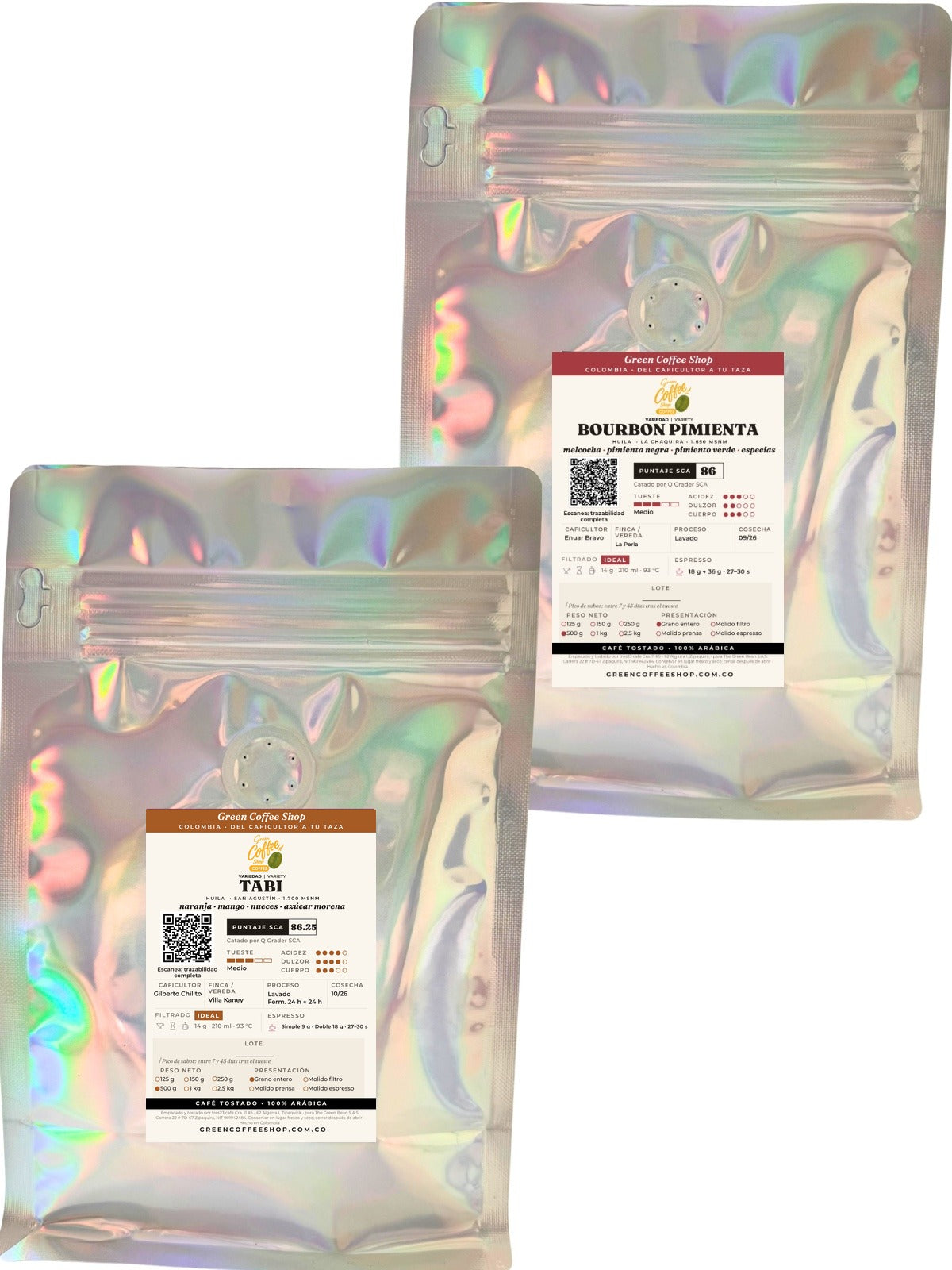
Filter is ideal for clean, aromatic coffees. In our range, these work very well:

Not sure which to choose? Take the 45-second quiz and we'll recommend a coffee for your flavour profile.

Freshness matters

Roasted coffee tastes best between 7 and 45 days after roasting. Store it in a cool, dry place with the bag tightly closed, and grind it just before brewing if you can. Check the lot and roast date on the bag.

Frequently asked questions

Can I use the same method in a Chemex or Melitta?

Yes. Keep the ratio of 14 g per 210 ml and adjust the grind: the Chemex calls for a slightly coarser grind and usually takes longer.

I don't have a grinder, what do I do?

You can order your coffee ground for filter. When we message you to confirm your order, tell us your method and we'll deliver it ground for it.

What water should I use?

Filtered or soft water, with no chlorine taste. Water is about 98 % of your cup, so you'll taste it.

And for espresso?

The label recipe is different: 18 g of coffee that become 36 g of drink in 27 to 30 seconds, with a fine grind.

Ready to try? See all our specialty roasted coffee. Every bag comes with the recipe, the SCA score and traceability back to the coffee grower.

New to specialty coffee?

Start with a tasting kit (two 150 g bags to compare), or pick a bag based on how you brew.

Tasting kits For espresso For filter 45-second quiz

Brew it with a filter coffee

Every bag comes with this recipe printed on it, the SCA score and the name of the coffee grower.

🔥 Yield factor: how much coffee your load gives

For roasters, coffee shops that buy green coffee, and coffee growers. Just brewing at home? See what each cup costs you.

Yield factor ("factor de rendimiento"): the kilos of dry parchment coffee needed to get one 70 kg sack of excelso (export-grade green coffee). The lower, the better.

Example: at factor 94, a 125 kg load leaves 93.1 kg of green coffee; at factor 88 it leaves 99.4 kg. That is 6.3 kg more coffee to roast from every load. Read the full explanation

94 is the factor the FNC (Colombian Coffee Growers Federation) reference price is quoted at. If you do not know yours, work it out from a sample (below).
It only changes the example price of the load. Differentiated coffees are negotiated above the base price.
Example. Type the price you are offered or sell at.
What the mill charges to remove the husk ("maquila"). Example.
Farm → mill → your warehouse. Example.
Green coffee you are left with 93.1 kg
Real cost per kilo of green coffee(load + hulling + freight) ÷ kilos of green coffee ...

Do not know your factor? Work it out from a sample
Weigh the sample, hull it, remove the pasilla and defective beans, and weigh what is left. Factor = grams of sample × 70 ÷ grams of sound green coffee. The numbers above are an example.

🌱 What if you buy it already hulled? In our store green coffee comes hulled, selected at factor 88–90: you pay per kilo of coffee you will actually roast, with no hulling and no husk. Today's example: $70.000 per kilo (buying 1 kg); from 5 kg up the price per kilo goes down. See green coffee
🧑‍🌾 Are you a coffee grower? The same sum shows how much green coffee your parchment gives and how much each factor point changes it. I am a grower: I want to sell my coffee

☕ From green kilo to cup: cost, margin and how much coffee you need a month

For coffee shops and roasters. Replace the examples with your own numbers.

Starts with today's price of a green coffee from our store (1 kg). Change it to yours.
The weight coffee loses in roasting (water and chaff). Usually 15–20%.
Gas and power, or what a roaster charges you (toll roasting). Example.
Dose: double espresso, 18 g.
Example. Use the price on your menu.
Example.
Example.
Real cost per roasted kiloWhat each kilo ready to serve really costs you $0
Cost per gram $0
Coffee in each cup $0
Margin per cup(0%) $0
Roasted coffee you need a month 0 kg
Margin for the monthSelling price minus coffee. Before milk, cups, rent and wages. $0

Want these numbers reviewed by a person?
Leave your details and we will write to you with your projection and the coffee that fits it.

Frequently asked questions

What is the coffee yield factor (factor de rendimiento)?
It is the number of kilos of dry parchment coffee needed to get one 70 kg sack of excelso (export-grade green coffee). The lower the factor, the more sound green coffee comes out of each load. At factor 94, a 125 kg load gives about 93.1 kg of green coffee; at factor 88, about 99.4 kg.
How do I work out how much green coffee a load gives?
Kilos of green coffee = 125 kg ÷ factor × 70. The calculator adds what you pay for hulling and freight to the price of the load and divides the total by those kilos: that is your real cost per kilo of green coffee, which is almost always higher than the purchase price divided by 125.
How do I get the yield factor from a sample?
Weigh 250 g of dry parchment, hull it, remove the pasilla (low-grade and defective beans) and weigh the sound green coffee. Factor = 250 × 70 ÷ grams of sound green coffee. Example: 186 g of sound green coffee gives a factor close to 94.
Which is better: buying parchment or green coffee that is already hulled?
With parchment you pay freight and hulling for husk, and if the factor turns out higher than expected you get fewer kilos than you planned. With green coffee that is already hulled you pay per kilo of green coffee: the price you see is for the coffee you are going to roast.
What is the hulling fee (maquila de trilla)?
It is what a mill charges to remove the husk from parchment coffee. It is charged per sack or per load and you pay it even if the yield is low, so it has to be added to the purchase price.
What happens if the factor turns out higher than I planned?
You get less green coffee for the same money. If you buy at factor 94 and the mill gives 98, the load yields 89.3 kg instead of 93.1 kg: almost 4 kg less, and your cost per kilo goes up.
Why does coffee weigh less after roasting?
When it is roasted, coffee loses between 15% and 20% of its weight (water and chaff). If a kilo of green coffee costs $30.000 COP and loses 20%, each roasted kilo costs you $37.500 in coffee alone, because 800 g are left from every green kilo.
What green coffee does Green Coffee Shop sell?
Colombian green coffee that is already hulled, from 1 kg, with the lot sheet (moisture, screen size, SCA score) and the name of the coffee grower. We ship anywhere in Colombia.

Comments

Be the first to comment.
All comments are moderated before being published.
Chat Support

Support
Typically replies within an hour

Hi there 👋

How can I help you?
×